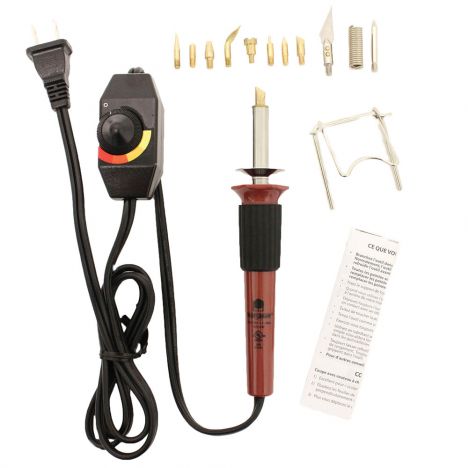
You may be thinking: why do I need a wood burning transfer tip? A transfer tip will be all that is needed to get you to the area you want. There are many options for wood burning tip holders, such as a portable stand. You should understand how to add a transfer tip and use it on a wood burner before making any purchases.
Carbon paper
Use carbon paper to make a wood burning transfer tip. Make sure you prepare your pattern paper beforehand. Fold the pattern paper from the back. Next, use a soft pencil to redraw the entire design. After the transfer is complete, remove the carbon papers and redraw your design. You can also trace your lines with an ink pen. You will see lines when you burn the ink, so make sure to carefully follow your pattern.
Although most buyers find carbon paper convenient, some customers found it difficult to use correctly. For this reason, some prefer to use tracing paper. Although it works well, you should be careful to not burn the paper in order to keep it from tearing. It is made of classic materials and can easily be re-used. Carbon paper is also a time- and paper-saving tool. Carbon paper can also serve many purposes. The carbon paper is usually stored in a zip-lock bag.
Photo paper
When burning a photo, you may be tempted to just burn the entire photo. You might be tempted to burn the whole photo. To make sure that the text is properly printed, mirror the image. You should also avoid touching the glossy side of your photo, as it can cause ink to run. You can transfer a more detailed photograph with a chartpak colorless pen. This pen can transfer detailed lines and images for $5. It is available in a range of colors and costs around $5.
Photo paper can be used to transfer patterns on a smaller wood canvas. Photo paper is easy to find, and it's also a great way to avoid messy carbon paper. Select a photo-paper that is smooth, so it doesn’t absorb the printer’s ink. It can be laid ink side down on the wooden surface. Then, lift it off to reveal the full-transferred image.
Razertip Transfer Shader Pyrography
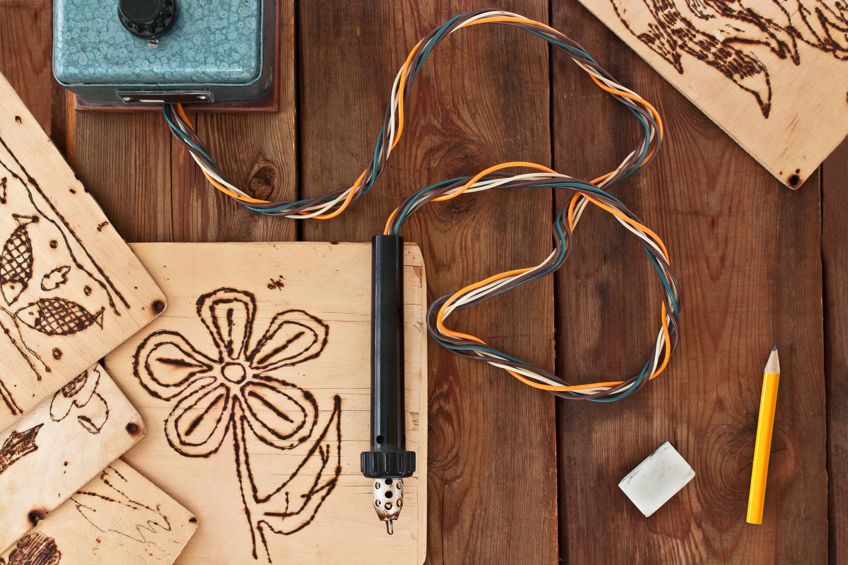
The Razertip Transfer Shader is one the most widely used wood burning tips. The stainless steel tip with a teardrop shape is great for shading or transferring heat-photocopied images. You can purchase three different types of handpieces to fit a variety of projects. Razertip can also be used as a pyrography tool to create fine line. Razertip.com provides more information.
Razertip pyrography pens are covered by a 1-year warranty. There are many tip types available. These pens are small and perfect for fine detail work. They are made to last. The more durable models have thicker tips and connectors posts, larger pen bodies and are more resistant. They require a heavier cord and a higher heating set.
Graphite pencil
One of the most essential items when using a graphite pencil for wood burning transfer tip is a tracing paper. This paper is your guide for transferring a design on paper to wood. Before you can transfer a design, it is important to first identify the design. You can choose between a simple and more complex design, depending on the design. A complex design may be easier to transfer by printing it first.
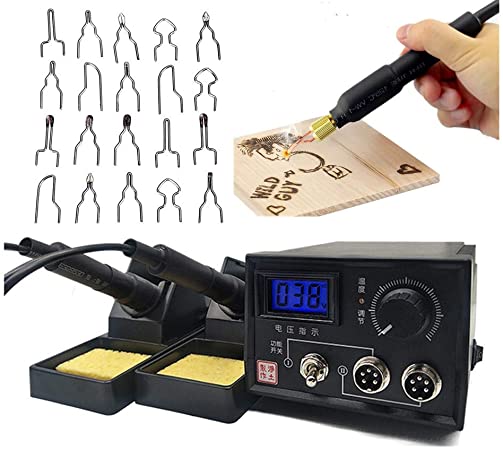
Place graphite paper on the dark side of the wood. Follow the design lines with light to medium pressure. Once you're done, take off the paper. Once you're done, you're ready to transfer the design. An alternative method for beginners is to trace the design on paper by hand. However, this won't be as precise as using a graphite or pencil, as the wood will become stiff.
FAQ
Which wooden items are very popular?
Wood that has been harvested sustainably is the best-selling type of wood.
Maple, cherry, mahogany walnut, teak, mahogany and maple are the most common woods for furniture.
These woods not only have great strength, but also beautiful patterns and colors. If they are well cared for, they can last many years.
To protect wood furniture from moisture damage, it should be painted first. This includes all surfaces, including drawers, doors, and handles.
Paint that is water-resistant will ensure furniture lasts for a long time.
Use a high-quality, oil-based primer and two coats of topcoat. You may need to apply several coats of top coat depending on how much wear it is expected.
Spray cans and aerosol spray paints are not recommended. These products contain solvents that evaporate quickly and leave behind harmful fumes.
What is the minimum amount I will need to start?
Each project is unique so there aren’t exact numbers. Here are some factors to help you estimate how much money you will need.
-
Cost of materials
-
Tools and equipment
-
Time spent working on this project
-
Hourly rate
-
What is your expectation for profit?
-
It doesn't matter if your goal is to hire help
If you're just starting out, you may decide to start small by making simple items such as boxes and picture frames. As you gain more experience, you will be able tackle more complicated projects.
Do I have to refinish my furniture?
Yes! Yes! There are many methods to refinish antique furniture without hiring a professional. Here are a few ideas:
Use sandpaper to remove scratches and stains. After that, use a clean towel to wipe the surface.
Apply clear polyurethane paint. Let dry completely before moving furniture around.
Paint furniture with acrylic paint.
Instead of painting, use stain. The furniture will get a rich look with the stain.
Apply shellac wax. This will protect and shine the wood.
Statistics
- Overall employment of woodworkers is projected to grow 8 percent from 2020 to 2030, about as fast as the average for all occupations. (bls.gov)
- The U.S. Bureau of Labor Statistics (BLS) estimates that the number of jobs for woodworkers will decline by 4% between 2019 and 2029. (indeed.com)
- Woodworkers on the lower end of that spectrum, the bottom 10% to be exact, make roughly $24,000 a year, while the top 10% makes $108,000. (zippia.com)
- In 2014, there were just over 237,000 jobs for all woodworkers, with other wood product manufacturing employing 23 percent; wood kitchen cabinets and countertop manufacturing employing 21 percent. (theartcareerproject.com)
External Links
How To
How to join wood without using nails
Woodworking is a hobby that many people enjoy doing. It is relaxing and enjoyable because you can create something useful with wood. However, there are times when you want to join two pieces of wood together without having to use nails. This article will demonstrate how to do so to preserve the beauty of your woodwork.
The first thing you'll need to do is cut off any rough edges from your pieces of wood before joining them together. Avoid leaving sharp edges that could lead to problems later. Now you can start gluing the boards together.
If you are working with hardwood, only one side should be glue. If you are using softwoods such pine or cedar, glue should only be applied to one side. Press the boards down until the glue is fully incorporated. Before moving onto the next step, make sure the glue has dried completely.
Once you've glued your boards together you will need to drill holes in the joints to accommodate screws. The size of these holes depends on what type of screw you choose to use. For example, if you're going to use a 1/2-inch wood screw, then you should drill a hole that is at least 3/4 inches deep.
After drilling your holes, drive the screws into the board's backside. Don't hit the board's surface. You could damage the finish. When driving the screws, try to avoid hitting the ends of the screws too much. This will prevent splitting in the end grain of the wood.
Now that your project is finished, you'll want to protect it from the elements. You can seal the furniture pieces or cover the top. It doesn't matter what method you use, you want something that will last many years. Some examples include oil-based varnishes, polyurethane, shellac, lacquer, etc.
These products are available at most home improvement stores. You should make sure you are getting the right type for the job. Some finishes are toxic and should not ever be used indoors. So, always wear protective gear when handling them.